Extremity Deformity Correction
Multistage pediatric deformity correction using hexapod fixation achieved approximately 5 cm length restoration and full functional recovery.
Access to full clinical case report
Grow. Restore. Preserve.
Explore Limb Reconstruction techniques and clinical approaches for challenging cases
Limb reconstruction surgery is a specialized orthopedic field, focused on restoring alignment, function, and limb preservation in patients with challenging conditions such as deformity, limb length discrepancy, severe trauma, bone loss, and infection.1,2
This page helps clinicians explore:
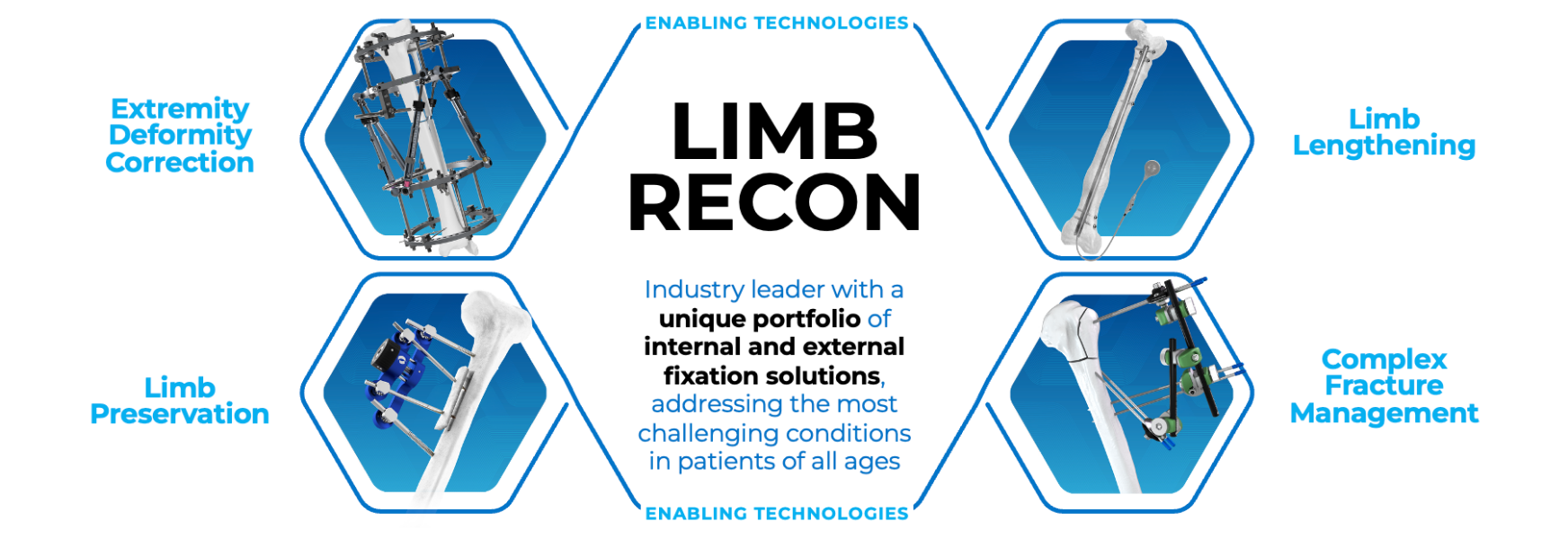
Over the past decades, limb reconstruction has evolved from isolated corrective procedures to integrated approaches that combine biomechanics, biology, and advanced surgical planning.3,4 A pivotal milestone in this evolution occurred in the mid‑20th century, when Gavriil Ilizarov revolutionized the field by introducing the principles of distraction osteogenesis—the gradual formation of new bone under controlled mechanical tension using external fixation. This concept fundamentally redefined the management of nonunions, bone defects, and complex deformities, laying the foundation for modern limb reconstruction.
Today, limb reconstruction is not only about correcting anatomy—it is about restoring function, preserving limbs, and enabling durable recovery even in the most challenging clinical scenarios.
The discipline is structured around four interconnected pillars:
Enabling Technologies support and enhance all these clinical areas.
Unlike conventional orthopedic procedures, limb reconstruction often involves staged treatments, progressive correction, and coordination among multiple specialties. Early clinical decisions—particularly in trauma and infection management—play a critical role in determining long-term outcomes and reconstructive possibilities.2
These principles and their clinical implications are explored in detail in this overview article:
Limb reconstruction is structured around four core clinical areas, supported by enabling technologies that improve precision, planning, and reproducibility.
Each area focuses on specific limb reconstruction techniques, addressed in dedicated clinical articles and supported by real-world clinical case reports.
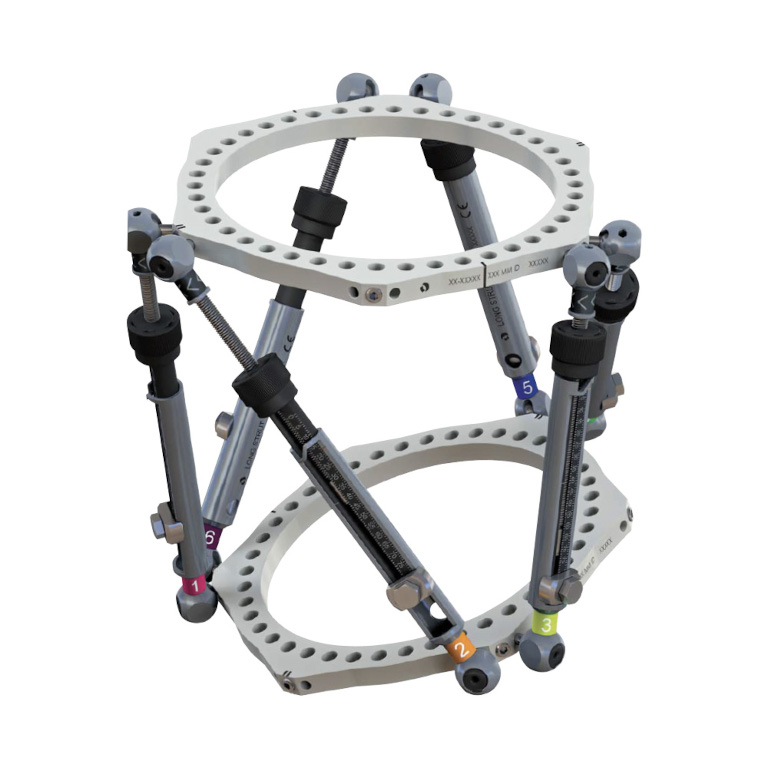
Extremity deformities affect limb alignment, joint loading, and long-term function, particularly in axial and rotational deformities.
Key techniques include:
Gradual correction improves precision and allows soft tissue to adapt during treatment.7,8 Technologies such as hexapod fixation systems enable accurate multiplanar correction in both pediatric and adult patients.8,9
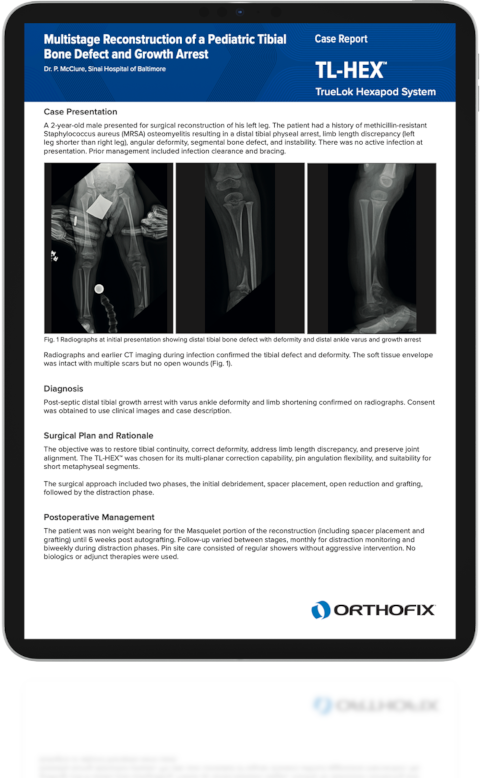
Case highlight: A pediatric post-infectious tibial deformity was treated with staged reconstruction using hexapod fixation, achieving multiplanar correction and approximately 5 cm of length restoration, with return to full activity.
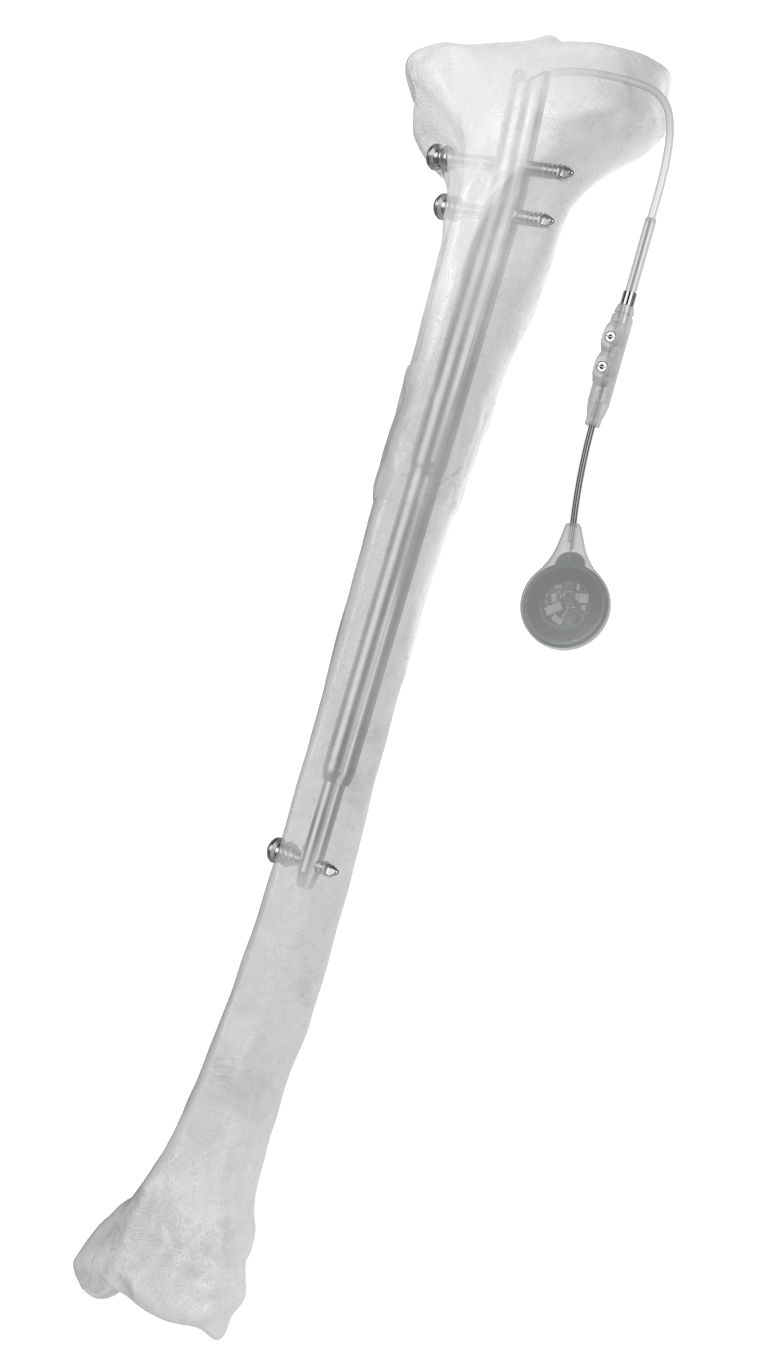
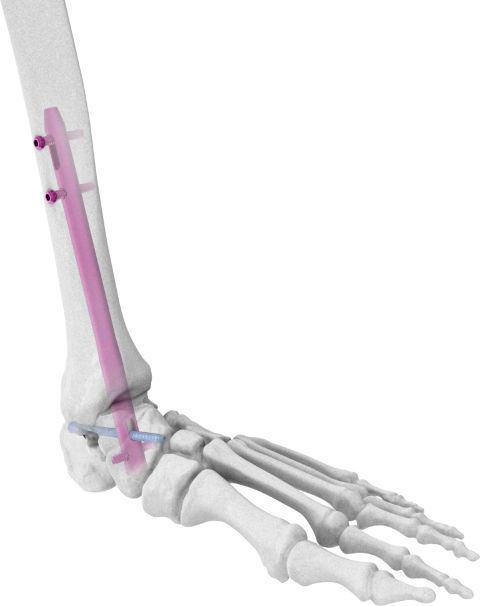
Limb lengthening addresses limb length discrepancy through controlled bone regeneration techniques based on distraction osteogenesis.
Advances in intramedullary lengthening systems have expanded treatment options and improved patient comfort in selected cases.10,11
Key techniques include:11,12,13
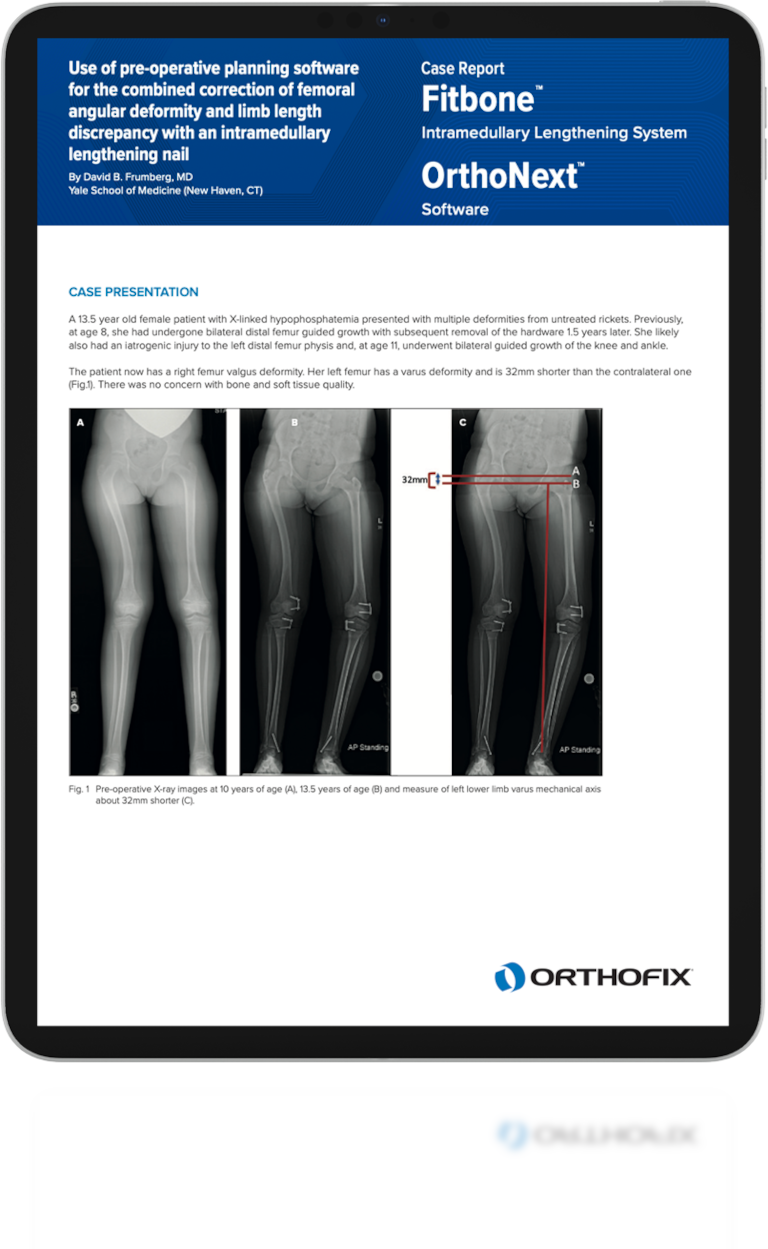
Case highlight: A staged intramedullary lengthening procedure successfully corrected a 32 mm discrepancy, restoring alignment and achieving high patient satisfaction at follow-up.
Limb preservation focuses on preventing amputation in patients with severe limb-threatening conditions.
Typical scenarios include:
These cases require coordinated multidisciplinary strategies integrating orthopedic reconstruction, infection management, and soft-tissue coverage.2,5
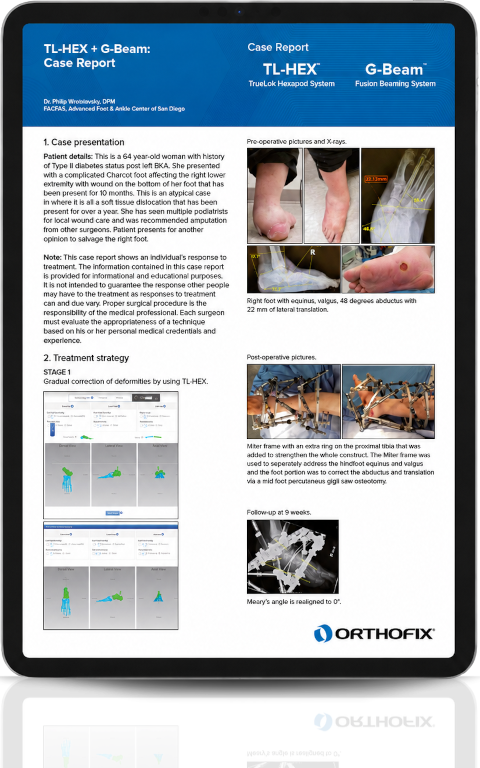
Case highlight: A complex Charcot foot deformity underwent staged reconstruction with gradual multiplanar correction and definitive stabilization, with a plantigrade and stable foot documented at 1-year follow-up.2
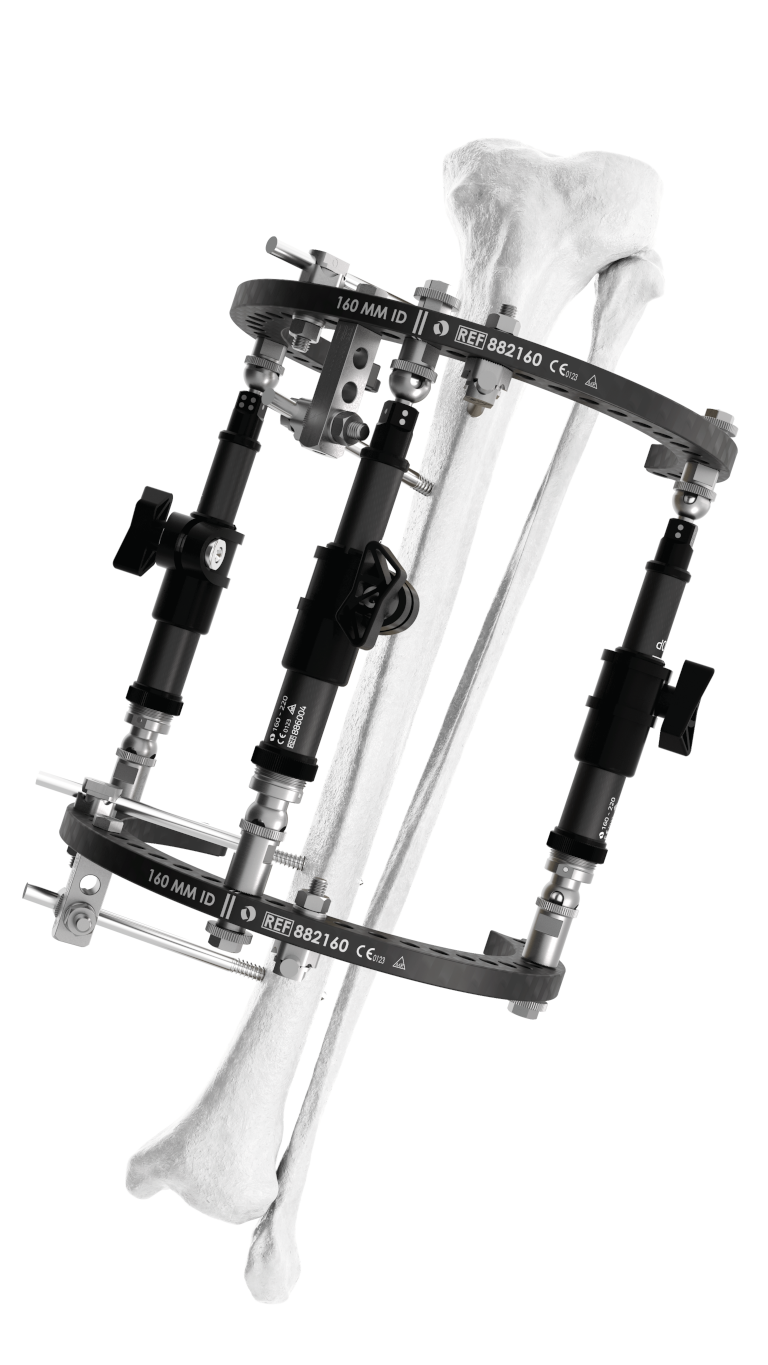
Complex fractures often result from high-energy trauma and are associated with soft tissue damage and increased infection risk. Successful management relies on staged strategies, early stabilization, and biologically respectful treatment principles. Bar-and-clamp fixation enables rapid primary stabilization, followed by secondary stabilization using monolateral, hybrid, or circular systems that respect bone biology while providing stable support throughout the treatment.
Key challenges include:
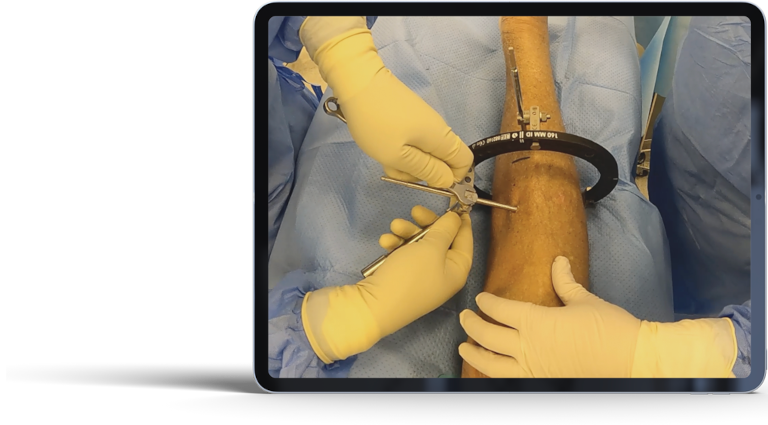
Case highlight: Staged fixation strategies allow early stability while preserving soft tissue and enabling progressive reconstruction in high-energy trauma cases.

Enabling technologies support precision, planning, and reproducibility in modern limb reconstruction.
Key components include:
Digital planning enables virtual simulation of procedures, supporting accurate execution and reducing intraoperative uncertainty.14,15
Case highlight: Digital planning using OrthoNext™ supported accurate simulation and successful correction in a case involving combined deformity and limb length discrepancy.
Multistage pediatric deformity correction using hexapod fixation achieved approximately 5 cm length restoration and full functional recovery.
Access to full clinical case reportIntramedullary limb lengthening corrected a 32 mm discrepancy with restored alignment and high patient satisfaction.
Access to full clinical case reportA complex Charcot foot deformity underwent staged reconstruction with gradual multiplanar correction and definitive stabilization, resulting in a plantigrade and stable foot at 1‑year follow‑up.
Access to full clinical case reportA procedural video illustrates staged ankle- spanning fixation in high-energy trauma using circular fixation.
Access the full clinical videoDigital preoperative planning optimized surgical execution in a complex deformity and limb length discrepancy case.
Access the full clinical case reportContinue exploring the full limb reconstruction knowledge base, from foundational overview
content to clinical techniques and case-based learning:
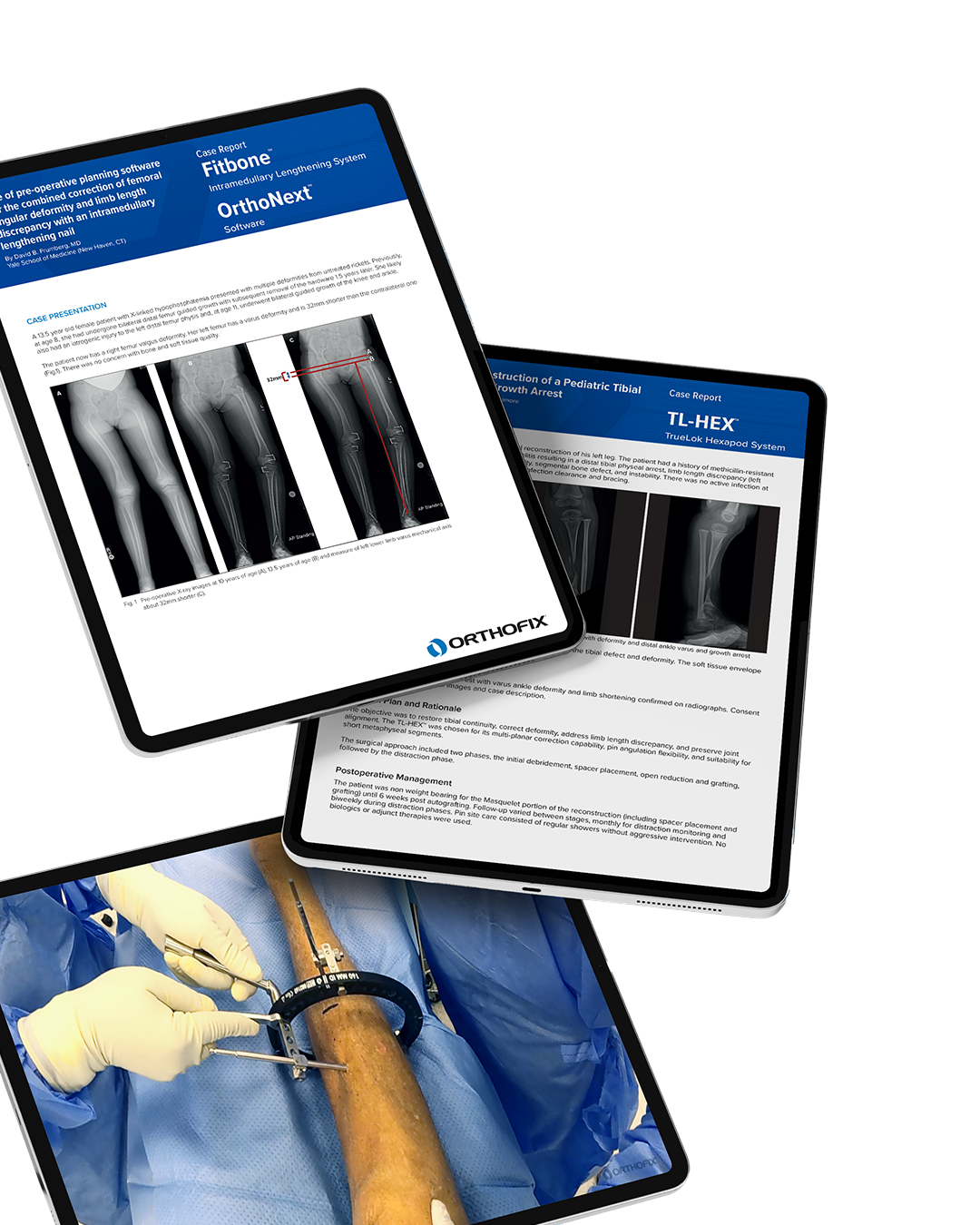
Access the Limb Reconstruction Clinical Library
Explore curated clinical resources, case reports, and expert insights to support advanced limb reconstruction practice.