


Complex fractures represent one of the most demanding areas in limb-reconstruction surgery. These injuries are frequently caused by high-energy mechanisms and are often associated with severe comminution, periarticular fractures, bone loss, nonunions, and a significant risk of infection—often in polytrauma contexts where soft tissue protection and early stability are paramount. No two cases are the same—constructs must be tailored to biomechanics, soft tissue condition, and the patient’s physiology. Most of the time, the chosen surgical approach must help orchestrate staged care from damage control to definitive reconstruction, enabling progressive loading over time, while maintaining focus on function, alignment, and long-term durability.
As Professor Nando Ferreira, an expert surgeon who works at Tygerberg Hospital, Parow, South Africa, explains: “These are cases that don’t use normal orthopedic techniques, they don’t use normal implants, and they often require reconstructive strategies.”
Rather than viewing fracture fixation as an isolated event, complex-fracture management must integrate biology, infection prevention, and future reconstructive options from the first surgical decision.1 Within Orthofix’s Limb Reconstruction framework, Complex Fracture Management complements the pillars of Limb Lengthening, Limb Preservation, and Extremity Deformity Correction to restore mobility and quality of life.
Timing and Decision Making
Trauma care occurs without patient selection; early choices must be biologically respectful and reconstruction‑minded. There is no possibility for analysis of the patient regarding its psychological will to sustain a long recovery or his background. Complex injuries present emergently, often in unstable patients, leaving limited time for optimization or detailed planning.
This means that early decisions—antibiotics, debridement strategy, stabilization choice, and timing—critically influence later reconstruction.2,3 Prompt antimicrobial treatment remains one of the most powerful preventive measures; infection risk rises when antibiotics are delayed beyond the early hours after injury.4 Thoughtful debridement and biologically respectful stabilization minimize additional tissue damage while preserving reconstructive options.5
Because reconstruction may span months, communication is essential. As Professor Ferreira explains: “The first absolute thing that you can promise is that we will be there every step of the way. That is the only promise I ever make to those patients.” Engaging patients as partners supports adherence throughout this prolonged journey.3
A Long, Staged Clinical Journey
High-energy, complex fractures often require a deliberate, staged pathway instead of single-stage definitive surgery. In many cases, this involves:
- Initial stabilization and contamination control
- Serial debridement, infection prevention and management
- Soft-tissue coverage when needed
- Correction of residual deformity
- Reconstruction of segmental defects
- Rehabilitation and long-term follow-up
Professor Ferreira highlights the benefit of early reconstructive involvement: “We now get involved in the first theatre visit of these cases, and when we are involved early the outcomes are better and we avoid burning reconstructive bridges.”
Professor Ferreira works in a tertiary referral center that receives some of the most severe trauma cases in the region. As he notes, “we are a tertiary level hospital that gets the worst of the worst. It’s referred to us.” In his setting, approximately 15–20% of tibial fractures require frames, and about 1% of femoral defects ultimately need reconstructive techniques. Although these represent a minority of trauma cases, “each one of these cases is so labor intensive that the 20% feels like basically 80% of the cases we are managing.”
Professor Ferreira emphasizes that trauma and reconstruction should not operate in isolation from one another. “If your trauma service is not connected to your reconstructive service, you will constantly create problems for the future,” he explains. Early reconstructive input helps ensure that fixation choices, soft-tissue strategies, and timing decisions do not “burn bridges” that will be needed later. In his experience, centers that integrate these teams—formally or informally—are better able to anticipate bone loss, infection risk, and deformity, and to plan staged solutions rather than reacting to complications.
This experience reinforces the need to plan trauma care with reconstruction in mind from the outset.
Coordinating acute treatment with later reconstruction helps reduce complications such as infection, malalignment, and nonunion.1,6
Early Management: Two Valid Pathways
Damage-Control Stabilization
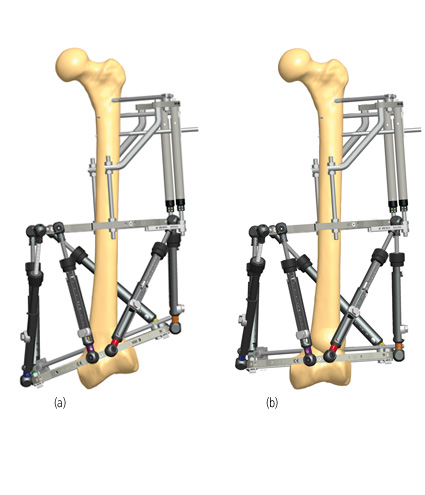
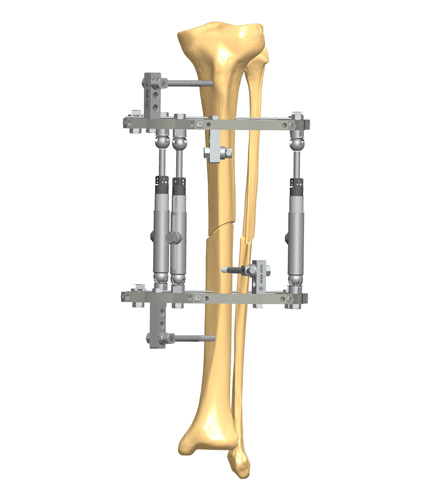
When patients are physiologically unstable or soft tissues are severely compromised, temporary stabilization with external fixation—using monolateral bars, clamps, or spanning frames—is often preferred. In these situations, the goal is not definitive fracture repair but rapid mechanical stabilization that allows resuscitation, soft-tissue recovery, and safe progression toward later reconstruction.
This approach reflects the principles of Damage Control Orthopedics (DCO), a staged strategy developed for severely injured or physiologically compromised trauma patients. DCO aims to limit the additional inflammatory and metabolic burden that would be induced by lengthy definitive surgery during the acute phase of injury. Instead, temporary external fixation is used to control hemorrhage, restore limb alignment, maintain length, and facilitate patient handling and critical care, while definitive osteosynthesis is deliberately deferred until the patient’s physiological condition has stabilized.1,6,7
By minimizing further soft-tissue trauma and surgical stress during the early phase, staged stabilization helps reduce the risk of systemic inflammatory response, pulmonary complications, and infection, while preserving the biological environment required for later reconstruction.4,5
In high-energy proximal tibia fractures, this staged damage-control approach—initial external fixation followed by delayed definitive fixation—has been associated with lower rates of soft-tissue complications and infection, supporting its role as a protective strategy in the most severe injuries.8
Early Reconstruction-Minded Fixation
In specialized centers, surgeons may select constructs that already account for anticipated reconstruction—particularly when deformity, infection risk, or bone loss are expected. As Professor Ferreira notes:
“The decision really depends on the patient, the surgeon’s experience, and the capability of the institution.”
Both strategies are legitimate—provided early choices do not compromise future reconstruction.
Circular and Hexapod Fixation – Essential, but Not Exclusive
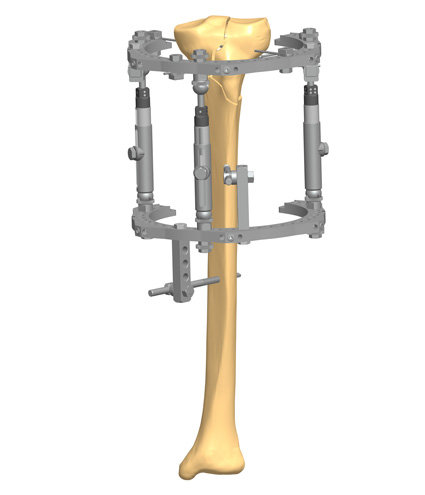
Circular external fixation based on Ilizarov principles allows gradual multiplanar correction while preserving soft-tissue biology.9,10 Hexapod systems extend these concepts with computer-assisted adjustments for alignment, rotation, and length, offering precise correction in unstable and complex patterns.9,10 Yet, as Professor Ferreira emphasizes: “Frames are powerful tools—but they are one part of the reconstructive toolbox.” In practice, complex fracture management often involves hybrid strategies and staged decision-making tailored to the patient and injury pattern.3 Contemporary reviews highlight how evolving frame technology supports fracture management, deformity correction, and staged reconstruction.11
Infection: A Central Priority
Fracture-related infection (FRI) remains one of the most significant complications in complex trauma. It increases re-operation rates, prolongs recovery, and may threaten limb preservation.3
Core principles consistently supported by literature include:
- Early antibiotics.4
- Radical but tissue-respectful debridement.5
- Stable fixation supporting biology.7
- Appropriate soft-tissue coverage.12
- Culture-guided systemic and, when indicated, local antibiotics.3,12
As Professor Ferreira summarizes: “Number one in our group is always infection control. If that goes wrong early, infection follows and it becomes very difficult to manage.”
Multidisciplinary Care Improves Predictability
Complex fractures rarely involve bone alone. Soft-tissue compromise, contamination, vascular injury, bone loss, systemic instability, and psychosocial stress often converge in the same patient. For this reason, coordinated multidisciplinary care is not optional—it is integral to successful reconstruction.
Modern recommendations specifically endorse multidisciplinary structures to improve diagnostics, treatment planning, and complication prevention.2,3,12
Professor Ferreira highlights that complex fracture management improves when orthopedic surgeons work in close partnership with plastic surgeons, vascular surgeons, infectious-disease specialists, wound-care teams, and rehabilitation professionals. Early collaboration helps align priorities—contamination control, soft-tissue viability, fixation stability, and long-term reconstruction—from the very beginning of treatment.
This approach is echoed in the literature. Modern fracture-related infection (FRI) guidance explicitly recommends structured multidisciplinary teams, emphasizing that combined expertise leads to better diagnostics, more appropriate debridement strategies, improved implant decisions, and optimized antimicrobial planning.3,12
Likewise, open-fracture reviews emphasize coordinated involvement of trauma surgery, microbiology, plastic surgery, and rehabilitation services to reduce complications and improve limb-preservation outcomes.2,4
In practical terms, multidisciplinary care enables:
- More accurate staging and planning
- Earlier and safer soft-tissue coverage
- Coherent infection-prevention strategies
- Fixation choices that preserve reconstructive options
- Smoother transitions from acute trauma to long-term follow-up
By integrating these teams around the patient from day one, complex fracture care becomes more predictable, structured, and patient-centered, supporting both limb salvage and functional recovery.
Orthofix Solutions Within Complex Fracture Pathways
Orthofix provides a portfolio of systems designed to support stabilization, alignment, and staged reconstruction across complex-fracture pathways, including:
- Galaxy Fixation™ System: A modular external fixation system for temporary and definitive fracture fixation of lower and upper limbs.
- TrueLok™ EVO Ring Fixation System: A modular circular external fixation system based on Ilizarov principles, which can be used for both temporary and definitive stabilization. The sterile sets give the surgeon the comfort of having all the necessary components, ready to use, with a streamlined configuration. Rings and struts are made of carbon fiber to enhance the radiolucency of the frame, allowing for a clear visualization of the bone under X-rays.
- Chimaera Hip Fracture System™: A monocephalic hip nail with dual lag screw option for increased stability when required.
These technologies are used selectively, according to patient needs and surgical strategy, within multidisciplinary reconstructive frameworks.
A procedural video further illustrates the application of spanning fixation in complex fracture management using the TrueLok™ EVO Ring Fixation System.
The video demonstrates key technical steps, including reference pin placement, proximal ring application, and foot plate assembly, highlighting how stable ankle spanning can be achieved in the acute phase of injury. This approach supports alignment, protects soft tissues, and provides a reliable construct for staged management in high-energy trauma scenarios.
By ensuring early stability while preserving future reconstructive options, spanning constructs play a critical role within damage-control strategies and reconstruction-oriented trauma care.
Download the full video to explore the complete procedural workflow and clinical context.
Training, Collaboration, and Continuous Improvement
Given that early trauma decisions shape long-term outcomes, education remains essential. A recurrent theme in Professor Ferreira’s practice is the need to progressively upskill trauma surgeons in reconstruction principles. “Most complications we see are not because surgeons didn’t care—it’s because they were not trained to think reconstructively,” he notes. The goal is not to turn every trauma surgeon into a reconstruction specialist, but to ensure they understand how early trauma choices influence later options.
“If trauma surgeons understand frames, transport, soft-tissue timing and infection pathways,” he explains, “they will make better first-stage decisions—even if someone else completes the reconstruction later.”
Professor Ferreira highlights the role that industry collaboration can play when it is focused on clinical education rather than product promotion. “Orthofix has worked hard to create an education ecosystem,” he notes, referring to structured training programs and opportunities for case discussion with experienced reconstruction surgeons. Initiatives such as expert networks and hands-on workshops help surgeons gain confidence in complex-frame management and staged reconstruction techniques. “What I value most,” he adds, “is that the emphasis is on learning, on doing things correctly, rather than simply on using a device.”
Such initiatives help integrate reconstructive thinking earlier into trauma pathways and support consistent global practice.
When asked what advice he gives to younger surgeons, Professor Ferreira is clear: complex trauma is about discipline and planning. “Start simple. Learn the principles. Don’t rush into advanced reconstruction until you really understand the basics,” he says. He stresses the importance of mentorship, structured training, and humility in difficult cases. “Find people who have done this before and learn from them. The worst mistakes happen when we think we can do everything on our own.”
Conclusion
Complex fracture management bridges urgent trauma response and structured limb reconstruction in a setting where patient selection is not possible and infection remains a constant threat.
Success depends on:
- Biologically respectful stabilization
- Rigorous infection control
- Adaptable fixation concepts
- Access to defect-reconstruction strategies
- Multidisciplinary collaboration
- Sustained education and case sharing
By anticipating the long reconstructive journey from the first surgical decision, surgeons can optimize limb preservation and functional recovery.
Explore real-world limb reconstruction cases and deepen your clinical practice: access the dedicated clinical resources here.
Education and Orthofix Academy
Orthofix Orthopedics has redefined its global focus to concentrate on Limb Reconstruction, addressing complex congenital, developmental, and acquired conditions in patients of all ages.
To maximize surgical outcomes, Orthofix provides a series of resources complemented by Orthofix Academy, a dedicated platform for education and skill development in limb reconstruction.
By combining innovative technology with continuous learning opportunities, Orthofix supports surgeons in delivering the highest standards of care.
Stay Connected
- Instagram: Follow @OrthofixOrthopedics for exclusive tips, updates, and stories from the field.
- LinkedIn: Connect with us on our corporate LinkedIn Page to access news, thought leadership, industry updates, and career opportunities.
- YouTube: Subscribe to the Orthofix Orthopedics YouTube channel for educational videos.
Follow us today and join this growing community, united by a shared passion and mission to improve the lives of our patients.
The information in this article is intended exclusively for healthcare professionals. Federal law (USA) restricts these devices to sale by or on the order of a physician. Proper surgical procedure is the responsibility of the medical professional. Operative techniques are furnished as an informative guideline. Each surgeon must evaluate the appropriateness of a technique based on his or her personal medical credentials and experience.
Prof. Nando Ferreira is a paid consultant of Orthofix.
References
- Tejwani NC, Achan P. Staged management of high-energy proximal tibia fractures. Bull Hosp Jt Dis. 2004;62(1-2):62-66.
- Elniel AR, Giannoudis PV. Open fractures of the lower extremity: current management and clinical outcomes. EFORT Open Rev. 2018;3(5):316-325.
- Whiting PS, Obremskey W, Johal H, Shearer D, Volgas D, Balogh ZJ. Open fractures: evidence-based best practices. OTA Int. 2024;7(3 Suppl):e313.
- Zalavras CG. Prevention of infection in open fractures. Infect Dis Clin North Am. 2017;31(2):339-352.
- Cross WW, Swiontkowski MF. Treatment principles in the management of open fractures. Indian J Orthop. 2008;42(4):377-386.
- Egol KA, Tejwani NC, Capla EL, Wolinsky PL, Koval KJ. Staged management of high-energy proximal tibia fractures (OTA types 41): the results of a prospective, standardized protocol. J Orthop Trauma. 2005;19(7):448-456.
- Elniel AR, Giannoudis PV. Open fractures of the lower extremity: Current management and clinical outcomes. EFORT Open Rev. 2018;3(5):316-325. Published 2018 May 21. doi:10.1302/2058-5241.3.170072
- Canton G, Santolini F, Stella M, Moretti A, Surace MF, Murena L. Strategies to minimize soft tissues and septic complications in staged management of high-energy proximal tibia fractures. Eur J Orthop Surg Traumatol. 2020;30(4):671-680.
- Liu Y, Liu J, Yushan M, et al. Management of high-energy tibial shaft fractures using the hexapod circular external fixator. BMC Surg. 2021;21(1):95.
- Potgieter MS, Pretorius HS, Preez GD, Burger M, Ferreira N. Complications associated with hexapod circular fixation for acute fractures of the tibia diaphysis: A retrospective descriptive study at a high volume trauma centre. Injury. 2020;51(2):516-521.
- Widanage KND, De Silva MJ, Dulantha Lalitharatne T, Bull AMJ, Gopura RARC. Developments in circular external fixators: A review. Injury. 2023;54(12):111157.
- Metsemakers WJ, Morgenstern M, Senneville E, et al. General treatment principles for fracture-related infection: recommendations from an international expert group. Arch Orthop Trauma Surg. 2020;140(8):1013-1027.


