

Orthofix is globally recognized as a leader in advanced limb reconstruction. With decades of experience and continuous innovation, the company has developed a comprehensive portfolio of solutions designed to address complex musculoskeletal conditions across all age groups. From external fixation systems to intramedullary lengthening nails and enabling technologies, Orthofix supports orthopedic surgeons in managing some of the most challenging congenital, developmental, and acquired orthopedic conditions across four key pillars: Limb Preservation, Limb Lengthening, Complex Fracture Management, and Extremity Deformity Correction.
These pillars are supported by enabling technologies that enhance surgical planning and execution, contributing to improved consistency, precision, and clinical outcomes.
Orthofix is committed to supporting the full continuum of care – from diagnosis to recovery – through the development of innovative hardware and digital tools, the generation of clinical evidence, and the delivery of high-quality medical education programs.
What is Limb Reconstruction?
Limb reconstruction is a specialized branch of orthopedic surgery focused on restoring both anatomy and function in patients with congenital deformities, post-traumatic defects, infections, or complex limb-threatening conditions. It encompasses procedures such as deformity correction, limb lengthening, and bone defect reconstruction—often combining multiple surgical techniques to preserve the limb rather than amputate it. The ultimate goal is to restore alignment, mobility, and quality of life while ensuring long-term stability and independence.1
Historically, limb reconstruction evolved from a series of pivotal innovations in the management of fractures and deformities. Some authors date the origins of limb reconstruction back to Saint Ignatius of Loyola. Early pioneers of modern techniques such as Alessandro Codivilla and Vittorio Putti introduced traction and early osteotomy methods in the early 20th century, laying the groundwork for controlled bone lengthening. However, it was Gavriil Ilizarov in the mid-20th century who revolutionized the field with the principles of distraction osteogenesis—the gradual formation of new bone under tension through external fixation. His technique redefined possibilities in the management of nonunions, bone loss, and complex deformities, creating the foundation for the modern era of limb reconstruction.1
The late 20th and early 21st centuries marked a paradigm shift—from “limb salvage” to true limb reconstruction. Advances in biology, fixation systems, and microsurgery made it possible not only to preserve a limb but to rebuild it functionally and anatomically. Today, limb reconstruction combines mechanical precision with biological understanding, allowing surgeons to restore both structure and mobility even in severely compromised limbs.1
Modern limb reconstruction is inherently multidisciplinary, requiring collaboration among orthopedic surgeons, plastic and vascular specialists, physiotherapists, and rehabilitation teams. Successful outcomes depend not only on the device or surgical technique but on coordinated postoperative care, patient education, and long-term follow-up. This approach reflects the evolution of the field from technical innovation to a comprehensive, patient-centered discipline.2
The clinical need for limb reconstruction continues to grow, driven by the increasing prevalence of trauma, nonunions, congenital deformities, infections, and chronic diseases such as diabetes. These conditions impose a heavy personal and socioeconomic burden, reinforcing the importance of specialized centers, enabling technologies, and continuous surgeon education to meet modern reconstructive challenges.2
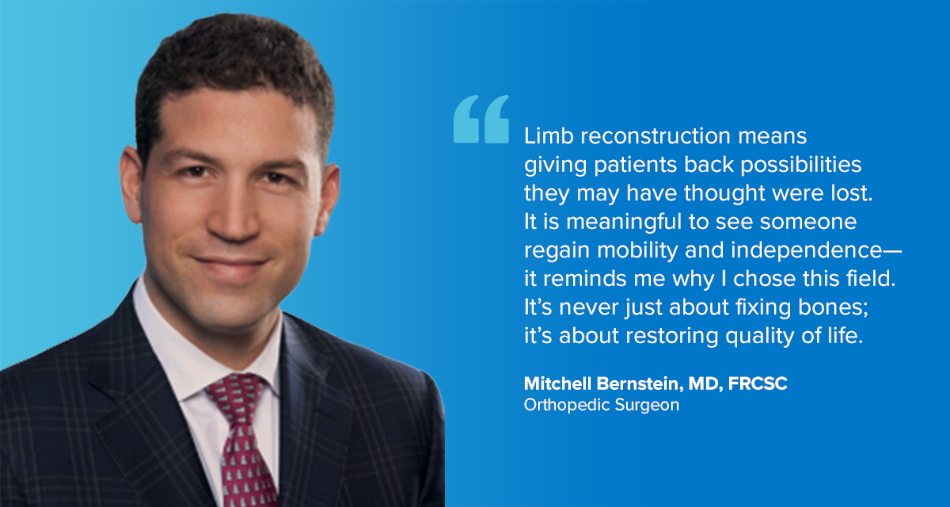
As Mitchell Bernstein, MD, FRCSC, from the Shriner’s Hospitals for Children, Montreal, Canada, explains: “For me, limb reconstruction means giving patients back possibilities they may have thought were lost. It is meaningful to see someone regain mobility and independence – it reminds me why I chose this field. It’s never just about fixing bones; it’s about restoring quality of life.”
The Four Pillars of Limb Reconstruction
Limb Lengthening
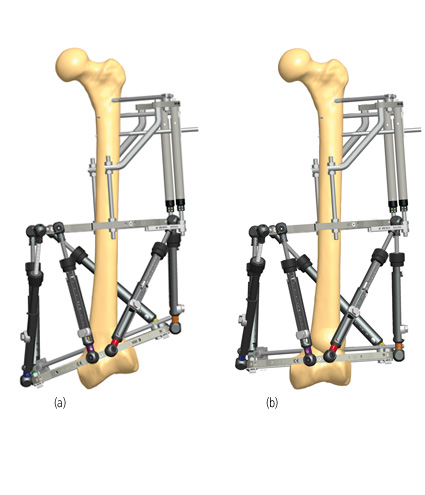
Orthofix has played a pioneering role in the evolution of limb lengthening, offering both external and motorized internal fixation systems.3,4 The portfolio includes the Fitbone™ Intramedullary Lengthening Nail, TrueLok™, TL-HEX™ and LRS Advanced Limb Reconstruction System™.
Supported by enabling technologies such as the OrthoNext™ preoperative planning software, these systems allow for controlled, gradual lengthening with improved patient comfort and optimized recovery.5,6
Dr. Bernstein highlights the importance of this progress: “The use of all internal techniques for limb lengthening and bone defect reconstruction has been a huge step forward. For the patient, the experience is entirely different compared to external devices, and the outcomes can be life changing.”
Extremity Deformity Correction
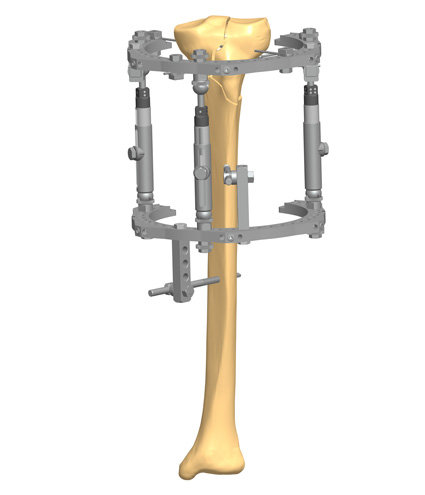
Orthofix provides a comprehensive range of extremity deformity correction solutions, including TL-HEX, TrueLok EVO, TrueLok and Rodeo™ Telescopic Nail.
The TL-HEX hexapod system, in combination with its dedicated digital planning software, enables multiplanar correction of angular and rotational deformities with high precision.7
Dr. Bernstein emphasizes preparation: “Planning is everything in deformity correction. The ability to simulate the correction in advance, to know exactly how the limb will look postoperatively, gives both the surgeon and the patient confidence in the process.”
Correcting these deformities improves mechanical alignment, reduces the risk of degenerative changes, and restores functional mobility.8
Complex Fracture Management
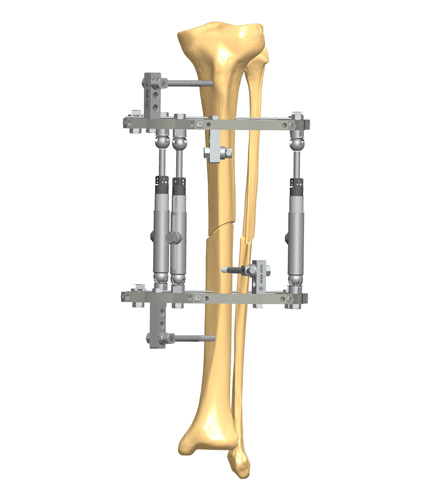
In cases of severe comminution, bone loss, or nonunions, Orthofix solutions offers modularity and adaptability to meet the specific biomechanical needs of each case. Hybrid constructs support both mechanical stability and biological healing, which is particularly critical in high-energy trauma scenarios.
As Dr. Bernstein notes: “In complex fracture care, you need systems that are adaptable. No two cases are alike, and the ability to tailor the fixation to the patient makes all the difference.”
Limb Preservation
For patients at risk of amputation – such as those with Charcot arthropathy, osteomyelitis, or severe trauma – Orthofix provides fixation systems that support limb preservation strategies. The portfolio includes Fitbone, TrueLok EVO, G-Beam™ Fusion Beaming System and AHN Ankle Hindfoot Nail™.
Dr. Bernstein underscores the importance of this work: “Preserving a limb, when many might consider amputation, is one of the most rewarding aspects of our specialty. It takes creativity, persistence, and the right tools.”
The Role of Enabling Technologies
Enabling technologies are integrated across all four pillars to support preoperative planning, intraoperative decision-making, and postoperative follow-up.
The OrthoNext platform offers biplanar digital planning, simulation of deformity correction, and reverse planning for intramedullary nails, helping to reduce surgical time and improve reproducibility.6 These tools also serve as valuable resources for training and standardizing surgical workflows.
Clinical Excellence: From Innovation to Outcomes
Orthofix’s commitment to clinical excellence is demonstrated through real-world data, case reports, and peer-reviewed publications that highlight improved alignment, reduced complication rates, and enhanced patient satisfaction.
This evidence-based approach ensures that innovation is consistently aligned with measurable clinical benefit.
Dr. Bernstein’s own practice illustrates how these tools translate into results: “When patients come back walking, sometimes after years of disability, it is humbling. It reminds us that limb reconstruction is not about the devices alone – it is about the lives they transform.”
Readers can learn more by exploring the latest Orthofix case reports, available for download on the dedicated resources page.
Education and Engagement Opportunities
A cornerstone of Orthofix’s mission is education. Through the Orthofix Academy, surgeons can access webinars, training modules, case reports, and hands-on courses designed to expand knowledge in limb reconstruction.
By fostering dialogue among international experts, Orthofix ensures that best practices are shared across borders and generations.
Dr. Bernstein underscores the value of ongoing engagement: “Education and sharing experiences are essential. We all learn from one another, and platforms like the Orthofix Academy allow us to stay connected and improve together.”
Conclusion: Empowering Surgeons, Transforming Lives
Orthofix continues to lead the growth in limb reconstruction, combining innovative devices with enabling technologies and a strong commitment to patient-centered care.
As Dr. Bernstein concludes: “At the end of the day, limb reconstruction is about giving people back their lives. Orthofix provides the tools, but it is our responsibility as surgeons to use them in a way that maximizes each patient’s potential.”
With continuous innovation, surgeon education, and global collaboration, Orthofix empowers healthcare professionals to transform outcomes and lives around the world.
Explore real-world limb reconstruction cases and deepen your clinical practice: access the dedicated clinical resources here.
Stay Connected
- Instagram: Follow @OrthofixOrthopedics for exclusive tips, updates, and stories from the field.
- LinkedIn: Connect with us on our corporate LinkedIn Page to access news, thought leadership, industry updates, and career opportunities.
- YouTube: Subscribe to the Orthofix Orthopedics YouTube channel for educational videos.
Follow us today and join this growing community, united by a shared passion and mission to improve the lives of our patients.
The information in this article is intended exclusively for healthcare professionals. Federal law (USA) restricts these devices to sale by or on the order of a physician. Proper surgical procedure is the responsibility of the medical professional. Operative techniques are furnished as an informative guideline. Each surgeon must evaluate the appropriateness of a technique based on his or her personal medical credentials and experience.
Mitchell Bernstein, MD is a paid consultant of Orthofix.
References
- Vandenbulcke F, Lineham B, Malagoli E, Kirienko A, PR, Britten S. The origins of limb lengthening and reconstruction surgery date back to 1521 when the first intervention ever reported in history was performed on St. Ignatius of Loyola, Int. Orthopaedics, Int Orthop. 2025 Sep;49(9):2289-2296. doi: 10.1007/s00264-025-06591-4..
- Paley D. Limb reconstruction in the early 21st century: The indications are broader and wider. J Limb Lengthen Reconstr 2018;4:65-6.
- Hasler CC, Krieg AH. Current concepts of leg lengthening. J Child Orthop. Jun 2012;6(2):89-104. doi:10.1007/s11832-012-0391-5
- Hosny GA. Limb lengthening history, evolution, complications and current concepts. J Orthop Traumatol. Mar 5, 2020;21(1):3. doi:10.1186/s10195-019-0541-3
- Whitaker AT, Gesheff MG, Jauregui JJ, Herzenberg JE. Comparison of PACS and Bone Ninja mobile application for assessment of lower extremity limb length discrepancy and alignment. J Child Orthop. Oct 2016;10(5):439-43. doi:10.1007/s11832-016-0761-5
- Smith JBV, Bishi H, Wang C, Asopa V, Field RE, Sochart DH. The accuracy and reliability of preoperative digital 2D templating in prosthesis size prediction in uncemented versus cemented total hip arthroplasty: a systematic review and meta-analysis. EFORT Open Rev. Nov 2021;6(11):1020-1039. doi:10.1302/2058-5241.6.210048
- O’Farrell P, Barnard AC, Birkholtz F. The tibial bayonet method of wound closure. Strategies in trauma and limb reconstruction (Online) 2018; 13(2): 103-8.
- Ferreira N, Marais LC. Management of tibial nonunions according to a novel treatment algorithm. Injury 2015; 46(12): 2422-7.


